5-Year Standpipe Flow Testing Decoded
What Property Teams Should Know Before 5-Year Standpipe Testing
![Integrity Fire Safety Services Because[IT]Matters newsletter banner with a fire sprinkler head discharging water in front of bright orange flames, overlaid with the IFSS name, Because[IT]Matters title, and company website.](https://integrityfiresafetyservices.com/wp-content/uploads/2026/06/BecauseITMatters_IntegrityFireSafetyServices-1024x340.png)
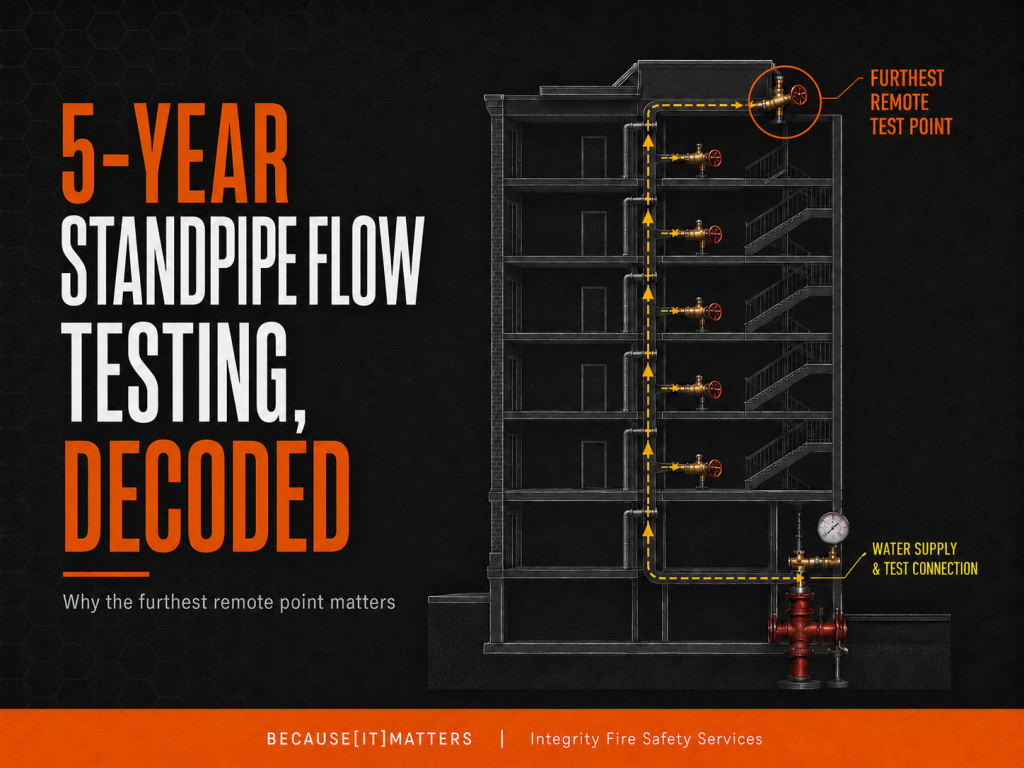
A standpipe system is a built-in firefighting water pathway inside a building. Instead of stretching hose lines from the street to upper floors, firefighters can connect to hose valves located in stairs, corridors, or other protected areas. In taller or larger buildings, that interior water access can be critical to fire department operations.
First, What Does 5-Year Standpipe Flow Testing Verify?
What Does “Furthest Remote” Mean in Standpipe Testing?
Common Issues / Warning Signs
- Low residual pressure
- Inadequate flow
- Underperforming fire pumps
- Pressure-reducing valve issues
- Pressure zone concerns
- Damaged hose valve hardware
- Leaking valves
- Missing caps
- Damaged threads
- Missing gaskets
- Corrosion or internal obstruction
- Hose valves that are blocked, hidden, or difficult for firefighters to access
What Should Property Teams Know & Do Prior to Testing?
- Before scheduling, confirm what type of standpipe system the building has. Automatic, semiautomatic, manual dry, manual wet, and combined sprinkler/standpipe systems can have different testing requirements.
- Property teams should also plan for access and water discharge. Testing may require access to stairs, roof areas if applicable, remote hose valve locations, fire pump rooms, mechanical spaces, drain points, and exterior discharge areas.
- Occupants may need notice because standpipe testing can involve water movement, noise, temporary access restrictions, and coordination with monitoring or building operations.
Standpipe Inspection & Maintenance Frequencies
Per NFPA 25 / local code
Inspection / Test Item | Details |
Regular visual inspections | Hose valves, hose connections, signage, caps, threads, access, and visible condition should be checked on a standard schedule. |
5-year standpipe flow testing | Automatic and semiautomatic standpipe systems are commonly flow-tested every 5 years. |
Manual dry systems | Manual dry standpipes may require 5-year hydrostatic testing rather than the same flow-test approach. |
PRV / pressure-regulating device testing | Pressure-reducing or pressure-regulating devices may have separate testing requirements and should be reviewed with a qualified provider. |
Frequently Asked Questions
Q: Is the furthest remote test always performed on the roof?
Q: Does every standpipe require the same 5-Year Standpipe Flow Testing?
Q: What does the test check for?
Q: Can building staff perform this test?
Q: What happens if the test fails?
Not sure whether your building needs a 5-year standpipe flow test?
Integrity Fire Safety Services can help you verify your standpipe type, identify the correct remote test point, coordinate access and water discharge, and document results for your property records and AHJ requirements.
Schedule Today*This information is provided as a general resource to assist property managers, building engineers, and facility management professionals in understanding fire and life safety best practices. It is not intended to serve as a comprehensive or exhaustive list of fire protection requirements.