
Fall Fire Sprinkler Prep: 4 Critical Tests for a Winter-Ready System
In Colorado, the first hard freeze often arrives without much warning. As a property or facility manager, you already know building safety is a year-round responsibility; but once temperatures drop, the margin for error gets razor thin.
The reality is simple: many essential fire protection tests involve moving large volumes of water. If performed during freezing conditions, that same water can damage pipes, break components, or instantly turn into ice sheets on sidewalks and streets—creating serious liability and life safety hazards.
This is why, from September through November, the most successful teams focus on fall fire sprinkler prep. They schedule with foresight, prioritize water-sensitive testing, and complete all weather-dependent work to ensure their facilities are winter-ready.
Bottom line: Proactive scheduling is your best strategy for freezebreak prevention. It protects your assets from costly freeze damage, keeps the public safe, and ensures your systems are truly winter-ready.
Your Pre-Winter Fire Safety Checklist
Phase 1: Your High-Priority Fall Safety Checklist
These services introduce water into normally dry piping, making them your highest priority. Getting them done in mild weather is non-negotiable.
1. Dry Valve Trip Testing (Partial & Full)
What It Is: Confirms dry valves open properly and allow water to reach the farthest point of the system.
Why It’s Critical: It’s the only way to verify your dry sprinkler system will perform in a fire. Introducing water late in the season risks ice expanding and bursting pipes.
What to Expect:
Brief, controlled water flow to the inspector’s test connection.
Advance notifications to tenants and your monitoring company.
Documented trip times and pressures for compliance records.
Integrity Pro Tip: Schedule this test for the warmest, sunniest day available. Our team will manage runoff with cones and barricades to eliminate slip hazards.
2. Hydrostatic Testing (FDC, Dry Systems & Standpipes)
What It Is: A 5-year integrity test that fills pipes with water and pressurizes them to check for leaks.
Why It’s Critical: Extensive water exposure plus freezing temps equals catastrophic damage. Getting this done early eliminates that risk.
What to Expect:
Controlled introduction of water under pressure.
Spotters posted to monitor runoff and public walkways.
Integrity Pro Tip: Before testing, we confirm all drains are open and operational.
3. Smoke Control System Testing
What It Is: A full check of fans, dampers, stairwell pressurization, and building automation.
Why It’s Critical: Even though it’s not water-based, bundling this test now ensures your life safety systems are verified before winter.
What to Expect: Documented results, coordinated sequences, and AHJ-ready reporting.
Phase 2: (October–November)
Annual Fire Pump Flow Test (& PRV Full-Flow)
What It Is: Confirms your fire pump can deliver the required water volume and pressure.
When to Schedule: Only during a stable warm forecast (ideally 3+ days above freezing). Cold-weather discharge creates instant ice sheets on sidewalks and streets—a public hazard and liability risk.
Pre-Test Checklist:
✅ Identify safe discharge routes
✅ Stage cones, barricades, and signage
✅ Notify monitoring and tenants
✅ Reschedule if temps drop — public safety always comes first
The Integrity Fire Safety Playbook: How to Schedule Like a Pro
Watch the Forecast: Build in contingency dates.
Communicate Proactively: Zero surprises for tenants or monitoring providers.
Prioritize Public Safety: Cones, barricades, and spotters are always on hand.
Document Everything: Full records of times, pressures, and results.
Align with the AHJ: Local authorities may have specific requirements—partnering early avoids issues later.
Frequently Asked Questions
Q: Can we really perform a fire pump test in October?
Q: Why bundle smoke control testing with water-based tests?
Q: What if we miss the warm-weather window for a 5-year hydro test?
Your Partner in Winter-Readiness
Fall fire sprinkler prep isn’t just a box to check. It’s a proactive strategy to prevent freeze damage, avoid liability, and ensure your systems are truly winter-ready when they’re needed most.
By partnering with a team that understands Colorado’s climate challenges, you can head into winter with confidence and peace of mind.
Disclaimer: This article is for planning purposes only and does not replace NFPA codes, manufacturer guidance, or AHJ requirements. Always verify with your AHJ.
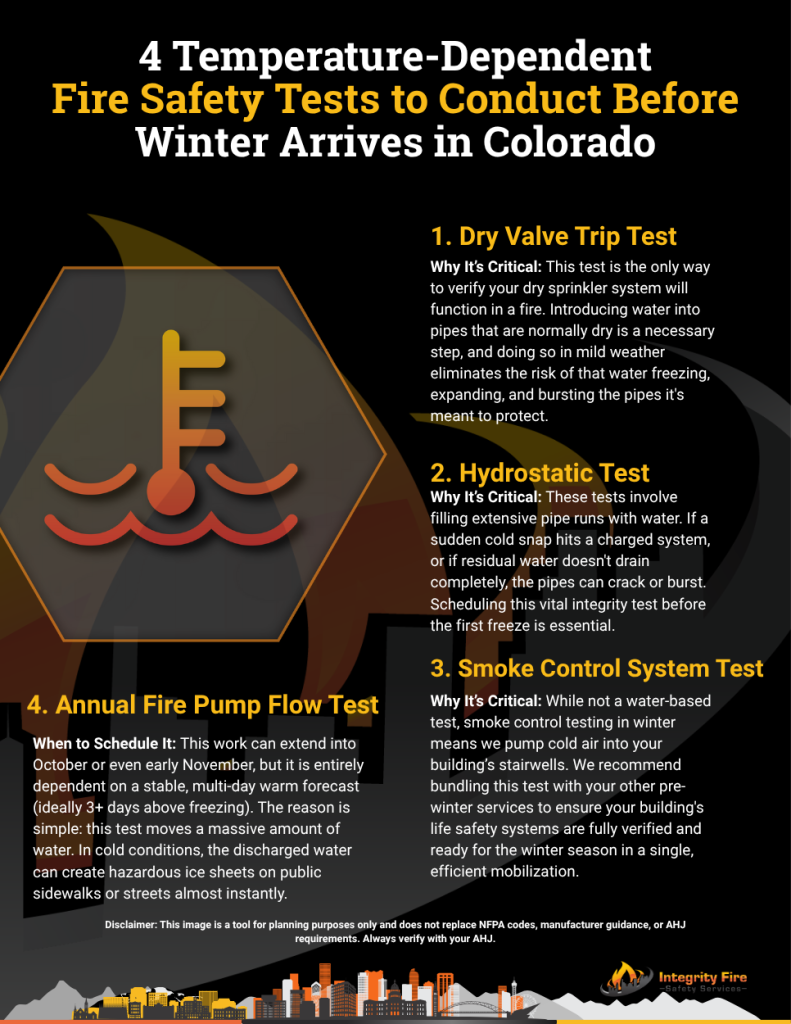


With Colorado’s first freeze around the corner, now is the perfect time for property professionals to complete their fall fire sprinkler prep and mitigate costly freeze-break occurrences.